Living Layers
What is Living Layers?
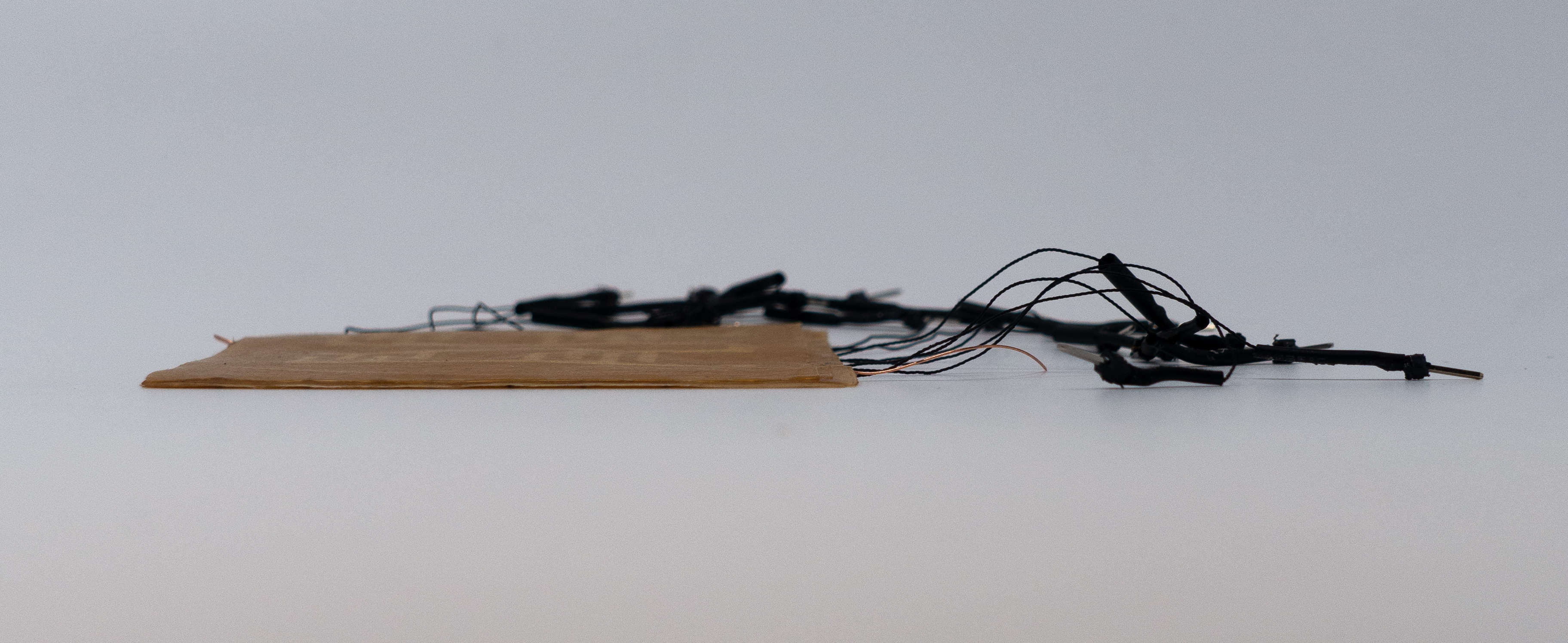
This research project is a result of the “Bio-based Fabrication for Sustainable Interactive Systems” seminar at my university. It explores growing, assembly, and evaluation of a sustainable modular e-skin prototype. Our work was published at TEI’25, and the code is available on GitHub.
More on the project
A few words from me
Over a course of ~six months a lot of blood, sweat & tears ;) went into this project. It was my first time experiencing research firsthand, but nonetheless one of the best experiences I’ve had during my time at university. Starting out, publishing a paper was never the goal, but pushing through ended up being an unexpected and simply amazing decision. This allowed me to visit my first conference TEI’25, present work of mine in front of an amazing audience and to explore the beautiful city of Bordeaux.
During seminar we were initially allowed to choose between multiple topics with one of them being meta-materials and the other bio-materials/plastics. While meta-materials caught my attention from the start, I was quite intrigued and at the same time a little appalled by bio-materials (especially bacterial cellulose). The idea of combining both topics came up quickly anyway, having a structure made from meta-materials that mimics living movement with sensing capabilities that are given through e-skin sounded interesting. Doing both would have ended up breaking the scope, this meant for us: it was time to make kombucha!
You may ask: kombucha? That’s correct, bacterial cellulose is a by-product of the fermentation process in kombucha, produced by the bacteria in the SCOBY. At first glance, especially when it’s still wet, bacterial cellulose can be quite repelling. Looking back, though, one thing I can say for sure is that it’s a material with amazing physical properties and exciting opportunities for integration into existing artifacts as well as for the development of new systems.
My contributions
- Bio-material Preparation: Cultivated kombucha, dried it, and prepared sheets for e-skin fabrication.
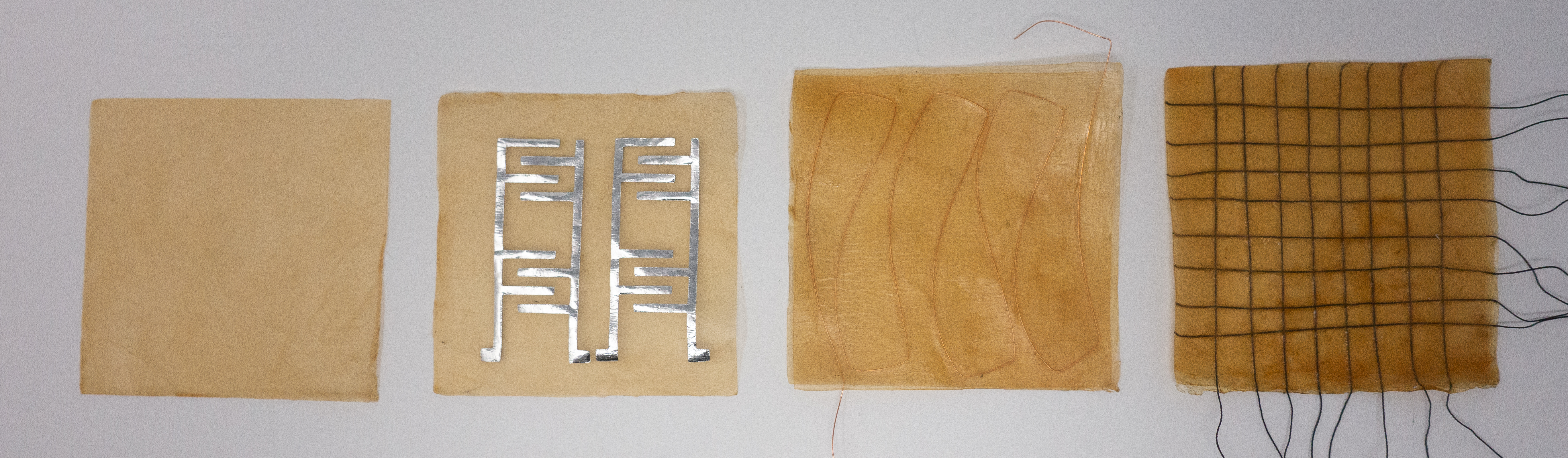
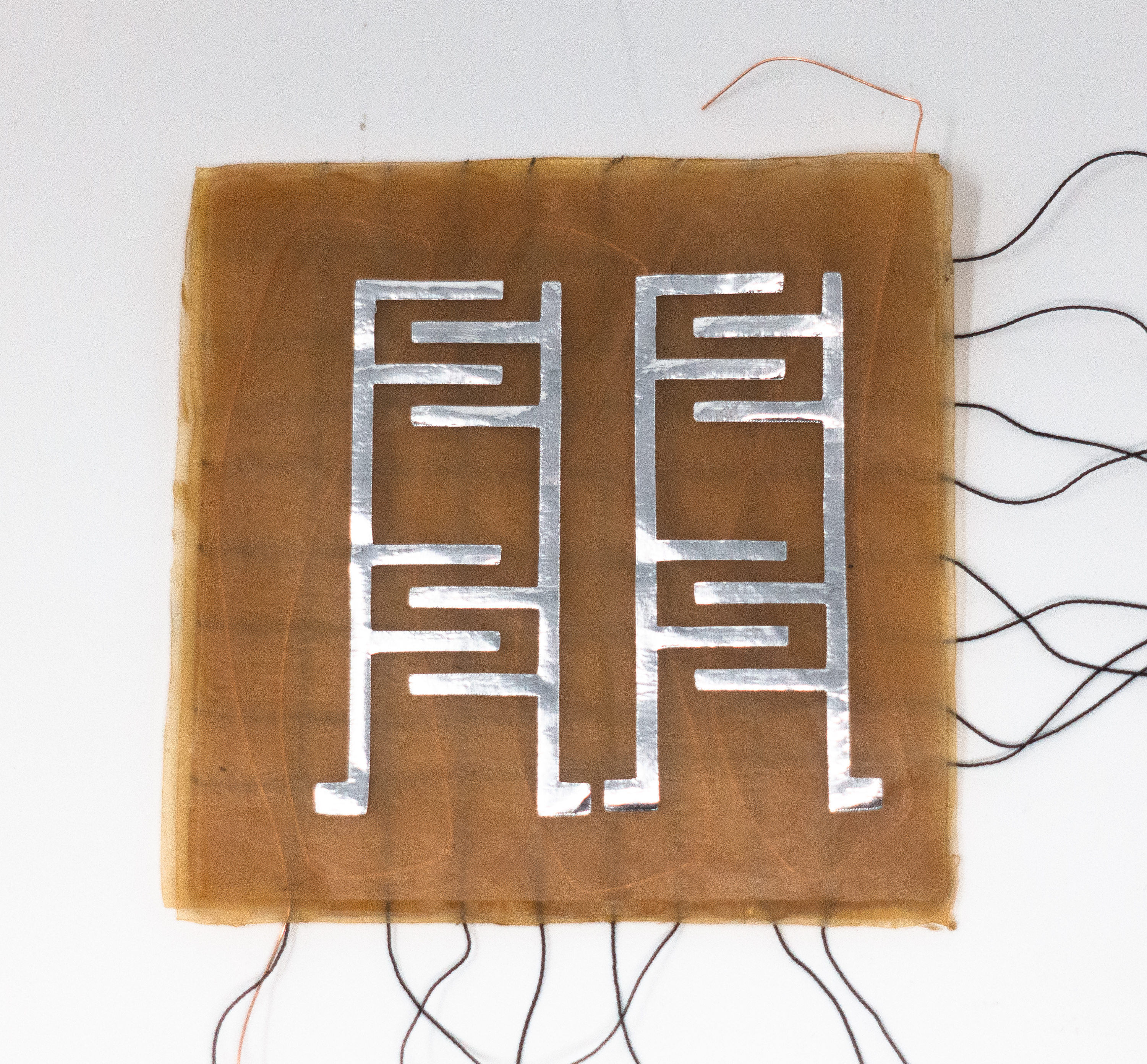
- Sensors & Hardware: Designed, built, and tested the touch matrix, humidity and temperature sensors (building on well-established concepts); designed voltage dividers and a Wheatstone bridge.
- Software: Wrote firmware for sensor data reading and evaluation (
C++,PythonandR). - Final assembly: Put everything together into the functional e-skin prototype.
Abstract
Due to its flexibility and sensitivity, e-skin is increasingly used in applications in fields such as Human-Computer Interaction (HCI), biomedical engineering, and robotics. However, current e-skin technologies face challenges related to durability, self-healing, and sustainability. Addressing these issues, sustainable materials offer promising alternatives with unique physical properties. In this context, we explore how the inherent characteristics of biomaterials, such as bacterial cellulose, can be utilized for the development of e-skin. We demonstrate the design and use of bacterial cellulose as an e-skin by multilayer assembly, sensor development, and sensor integration into the material.